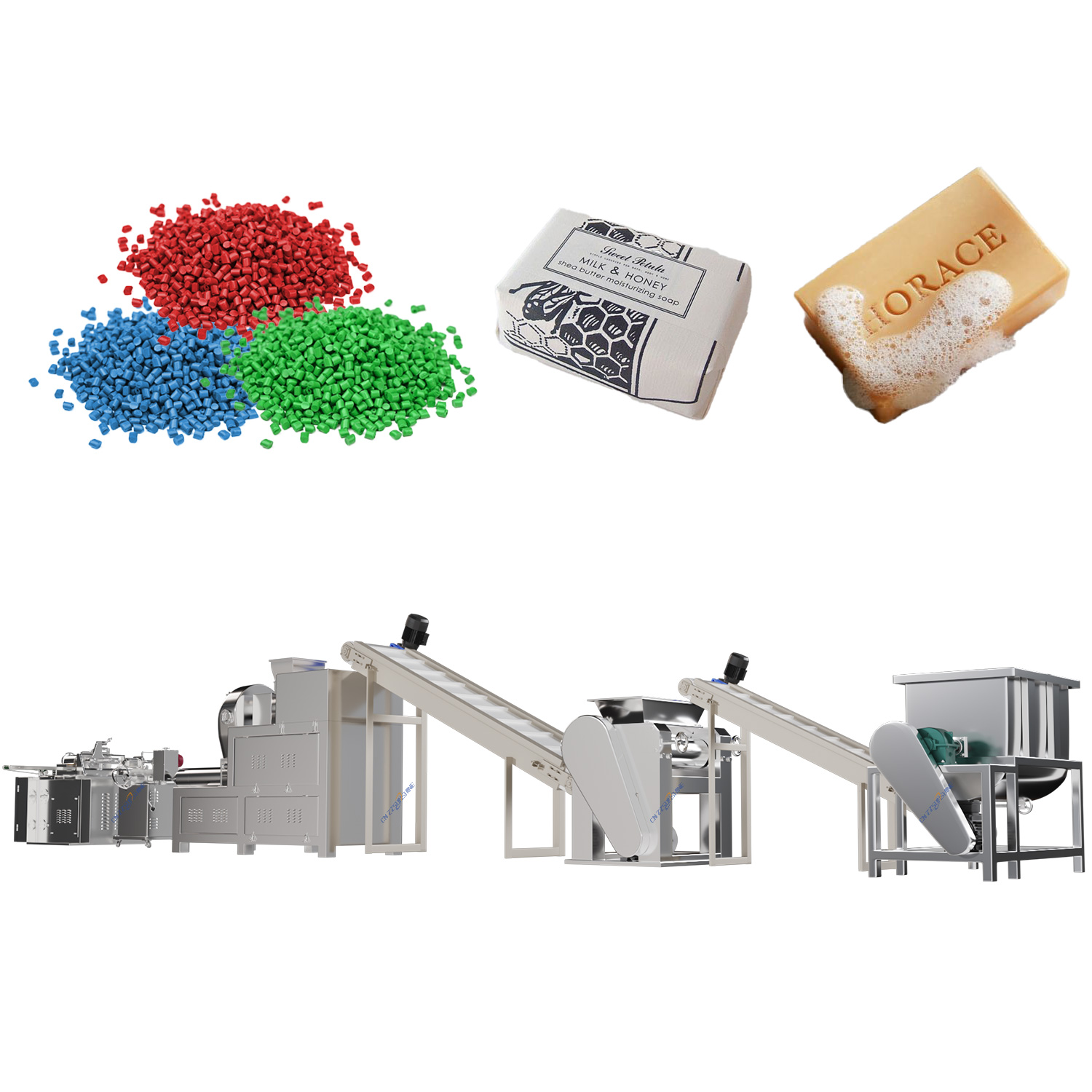
Capacity is the number that decides every other specification, and it is routinely chosen by guessing. Here is the calculation, and the assumptions people leave out of it.
The calculation
Capacity in kg/h is derived from what you intend to sell:
- Bars per day — your target sales volume, adjusted for stock build and returns.
- Bar weight — in kg. A 200 g bar is 0.2 kg.
- Tonnes per day = bars per day × bar weight ÷ 1000.
- Effective hours per day — shift hours minus cleaning, changeover and breaks. A nominal 8-hour shift is realistically 6.5–7 productive hours.
- kg/h = tonnes per day × 1000 ÷ effective hours.
- Add headroom of 20–30%.
A worked example
Target 12,000 bars of 200 g per day, one shift:
- 12,000 × 0.2 = 2,400 kg = 2.4 tonnes per day
- 2.4 × 1000 ÷ 6.75 effective hours = approximately 356 kg/h
- Add 25% headroom = approximately 445 kg/h
- Choose the next standard band above that, which in most ranges is 500 kg/h
That is the number to send to a supplier. Note that you asked for a 500 kg/h machine in order to produce 2.4 tonnes a day, which is the whole point of the headroom — the machine is not meant to run at its nameplate figure continuously.
Why headroom is not optional
A line sized exactly to the target must run at maximum speed all day with no interruptions. In reality the plodder needs cleaning, the cutter needs a blade check, raw material arrives late, and the mill needs its gap reset. Without headroom, every one of those becomes lost production instead of a small delay. The cost difference between one capacity band and the next is small compared with the cost of consistently missing orders.
Product mix complicates it
If you make more than one bar size, size the line for the smallest bar you will produce at the highest rate you need, because small bars consume machine time faster per kilogram in some stages. Also check the adjustment travel on the cutter and the stamper covers your whole range — that is a purchase decision, not a commissioning one.
Then check it against the bottleneck
Once you have a capacity figure, walk the sequence and find the slowest stage: melting, mixing, milling, extrusion, cutting, stamping, packing. The line runs at the speed of the bottleneck, so buying one fast machine and one slow one just wastes money on the fast one. Send us the whole intended sequence and we will tell you where the bottleneck will fall at your target output — it is usually either the mill or the packing stage, not the machine people expect.
Capacity you expect to reach in two years, not today
Most soap businesses grow faster than planned once distribution is established. Running a second shift on a machine that is already big enough is the cheapest capacity increase available. Ask for the price of the configuration one band up as well as the one you need now, so that decision is made with numbers rather than under pressure later.
Get a Quotation for This Machine
Tell us your target capacity, the soap type you produce and your country. Our engineers reply within 12 working hours with a configuration proposal and FOB price.
Send Your Requirement
Download the full specification catalogue
Frequently Asked Questions
How many bars does a 300 kg/h line produce?
It depends on bar weight and shift length. At 200 g per bar, 300 kg/h is 1,500 bars per hour, so about 10,000 bars in a 6.75-hour productive shift, or roughly 2 tonnes per day.
Should I buy a bigger line and run it slower?
Usually yes, within reason. Running a larger machine below maximum is easier on the machine and gives you recovery time when something stops. The exception is very small outputs, where a large machine cannot be run slowly enough to process a small batch properly.