

The Future of Suds: Your Guide to Soap Production Lines in 2025 (and Why China Leads the Way)
The soap aisle – a familiar sight in every supermarket and pharmacy. Behind those neatly stacked bars lies a complex manufacturing process that’s constantly evolving. As we approach 2025, the landscape for soap production lines is shifting dramatically, driven by demands for efficiency, sustainability, and customization. Whether you’re looking to upgrade an existing facility or launch a new venture, understanding the cutting-edge technology and the pivotal role of Chinese manufacturers is key.
The Modern Soap Making Challenge
Gone are the days of purely manual soap making dominating large-scale production. Today’s consumers expect variety – specialty beauty bars, eco-friendly laundry soaps, uniquely shaped novelty items. This diversity puts immense pressure on manufacturers. Older lines struggle with slow changeovers, inconsistent quality, high waste, and the sheer physical demands of operating heavy machinery like manual cutting machines or basic plodders. Downtime is costly, and scaling production to meet fluctuating demand can be a logistical nightmare.
Enter the 2025 Solution: Intelligent, Automated Soap Production Lines
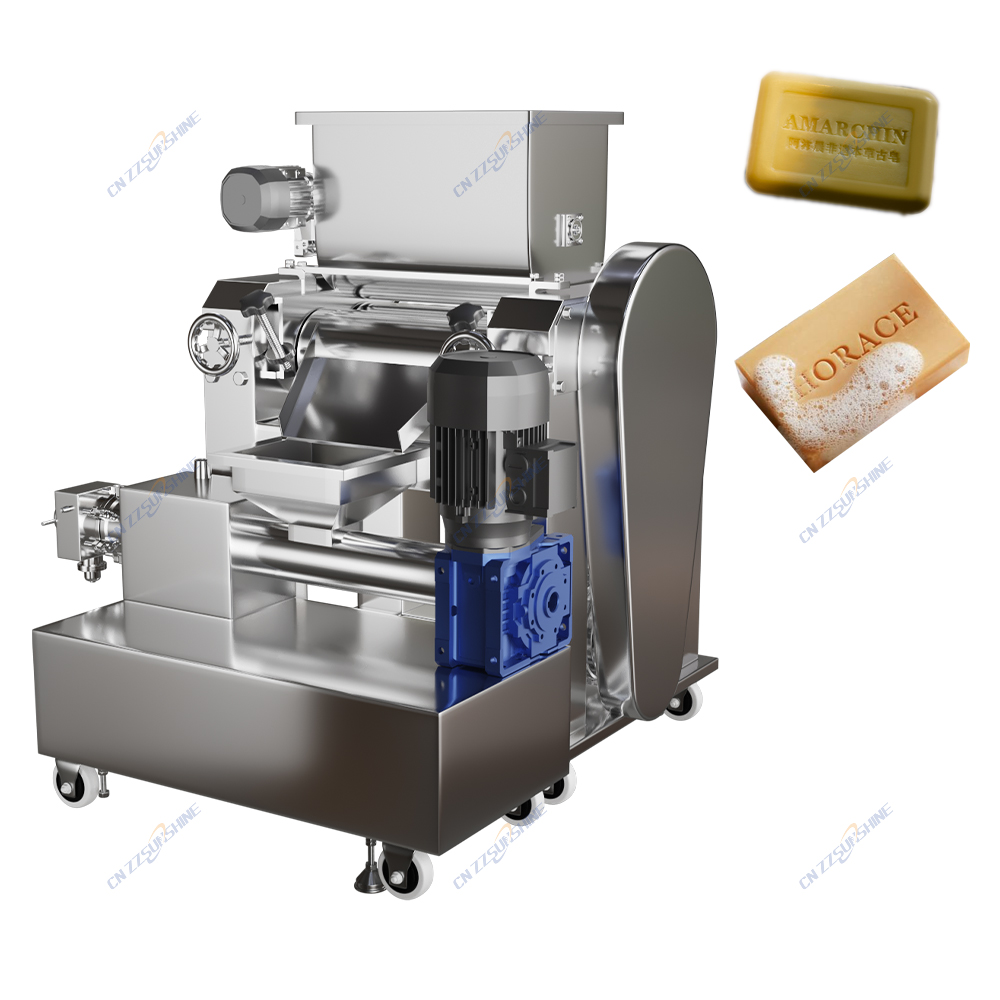
The soap production line of 2025 isn’t just automated; it’s intelligent. Imagine a seamlessly integrated system where a high-capacity soap mixer feeds saponified material into a sophisticated vacuum plodder, ensuring optimal moisture removal and texture for that perfect bar feel. From there, the extruded soap log moves automatically to an automatic block cutter machine, slicing with laser-like precision, eliminating variations common with manual cutting machines or even older pneumatic cutting machines.
But the intelligence doesn’t stop at cutting. Advanced lines incorporate electronic cutting machines and automatic printers for branding, working in concert with high-speed soap stamping machines that emboss logos or designs without missing a beat. Packaging, too, is revolutionized by high-throughput film packaging machines, ensuring each bar is wrapped securely and attractively at remarkable speeds. This level of integration defines the automatic soap production line, significantly boosting output while slashing labor costs and human error. Whether it’s a dedicated laundry bar soap production line, a high-end toilet soap finishing line, or a versatile beauty soap making line, automation is the cornerstone of modern efficiency.
Why Source Your Soap Making Machine from China?
For decades, Europe held the reputation for premium soap machinery. However, the tide has decisively turned. Chinese manufacturers have invested heavily in R&D and manufacturing technology, becoming the undisputed global leaders in producing high-quality, reliable, and technologically advanced soap making machines and complete lines.
Here’s why China is the go-to destination:
1. Technological Prowess: Chinese factories now produce machinery that rivals, and often surpasses, European counterparts in performance and features. Innovations in vacuum plodder designs, automatic soap production line control systems, and precision custom soap cutting machines are commonplace.
2. Unmatched Customization (OEM/ODM): Chinese manufacturers excel at OEM and ODM services. Need a three roller grinding mill specifically for your unique soap base? Require a custom soap cutting machine for an unusual bar shape? Or perhaps a mini soap production line scaled for a niche market? Chinese engineers are adept at tailoring solutions.
3. Cost-Effectiveness: Without compromising on quality, Chinese soap making production lines offer significantly better value. Lower manufacturing costs translate into more competitive pricing, providing a faster ROI.
4. Comprehensive Solutions: Leading Chinese suppliers don’t just sell individual machines like a soap plodder machine for bar soap or an electric washing soap cutter; they engineer complete, turnkey solutions. This includes everything from the initial mixing machine to the final film packaging machine, ensuring compatibility and seamless integration. They offer solutions for laundry soap making lines, bath soap making machines, and even washing liquid production equipment.
5. Scalability: From semi-automatic printers for smaller operations to fully integrated automatic soap production lines for high-volume factories, Chinese manufacturers cater to all scales.
Looking Ahead: The Customized, Sustainable Future
The soap line of 2025 is defined by flexibility. The ability to quickly switch between product types – a standard bath bar one day, a luxury beauty soap the next – is paramount. This demands sophisticated automatic printers and soap stamping machines capable of rapid changeovers, alongside adaptable soap plodder and cutting systems. Sustainability is also a major driver, influencing material choices and pushing for energy-efficient machinery designs. Chinese manufacturers are at the forefront of developing these eco-conscious solutions.
Conclusion
Investing in a modern soap production line is no longer just about replacing old equipment; it’s about future-proofing your business. The integration of intelligent automation, exemplified by automatic block cutter machines, vacuum plodders, and seamless packaging systems, delivers the efficiency, quality, and flexibility required to thrive in 2025’s competitive market. By partnering with innovative Chinese soap factories, manufacturers gain access to cutting-edge technology, unparalleled customization options through OEM services, and cost-effective, comprehensive solutions – from a single soap making machine to a complete automatic soap production line. The future of soap manufacturing is automated, adaptable, and increasingly sourced from China. Is your production line ready?