

Crafting Quality: Your Guide to Soap Production Lines for Laundry, Toilet & Bath Bars
Navigating the world of bar soap manufacturing requires precision, efficiency, and the right equipment. Whether you’re targeting the robust laundry market, the refined toilet soap sector, or the diverse bath soap industry, understanding the production line is paramount. This article delves into the core components and considerations for establishing a competitive soap making production line, highlighting scalability and value.
At the heart of any bar soap operation lies the soap plodder machine for bar soap. This crucial equipment transforms mixed soap base into a homogenous, dense, and extrudable mass. For achieving superior texture and eliminating air pockets, a Vacuum plodder is often the preferred choice, ensuring a smoother, higher-quality final bar. Preceding the plodder, the soap mixer or mixing machine plays a vital role in uniformly blending fats, oils, alkalis, and additives, laying the foundation for consistent soap properties.
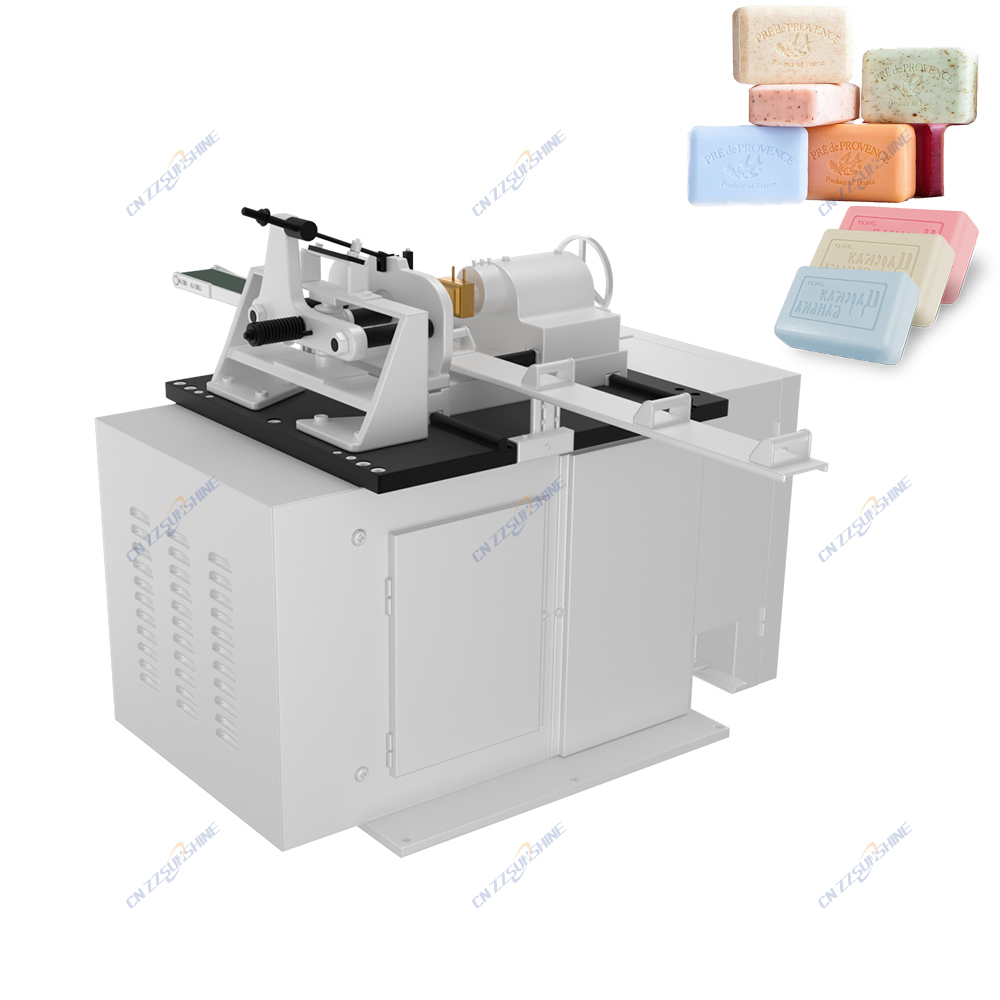
Once extruded from the plodder, the continuous soap log requires precise sizing. This is where cutting technology comes into play. Options range from manual cutting machines for very small-scale or artisanal setups to sophisticated automatic block cutter machines. For higher throughput and consistency, pneumatic cutting machines or electric washing soap cutters offer reliable, controlled slicing into individual soap bars or blocks. A custom soap cutting machine might be developed to handle unique bar dimensions or shapes efficiently.
For many soap types, refining is essential. An OEM three roller grinding mill is instrumental in this stage, milling the soap noodles to achieve a finer texture before plodding, particularly important for high-quality toilet and beauty soaps. Following cutting, finishing touches are applied. A soap stamping machine imprints logos or designs, while a film packaging machine seals the finished bars for protection and presentation. Automation levels vary, from semi-automatic printers to fully automatic printers integrated into the line.
The beauty of modern soap manufacturing lies in scalability. A mini soap production line might combine a compact mixer, a smaller plodder (soap plodder), and a manual or semi-automatic cutter/printer, ideal for startups or niche markets. For larger operations demanding high efficiency, a fully automatic soap production line integrates conveyors, automated cutters, stampers, and packagers, minimizing manual intervention and maximizing output. This scalability allows manufacturers to choose equipment – be it a laundry soap making line focused on durability and bulk production, a toilet soap finishing line emphasizing refinement, or a beauty soap making line requiring delicate handling of additives.
Selecting the right soap making machine combination is critical. Factors include desired bar type (laundry bar, toilet soap, bath soap), production volume, level of automation, and budget. Reputable suppliers offer factory price bath soap making line competitive solutions, providing cost-effective entry points or high-capacity systems. The ability to source OEM components or custom soap cutting machines ensures the line can be tailored to specific formulations and branding needs.
Ultimately, investing in a well-designed laundry bar soap production line or bath soap making machine setup is an investment in quality and efficiency. By understanding the core machinery – the mixer, plodder (especially the vacuum plodder), cutter (be it electronic cutting machine or pneumatic), refiner, stamper, and packager – and leveraging scalable options from mini soap production lines to fully automatic soap production lines, manufacturers can build a competitive operation. Partnering with suppliers who offer tailored solutions at competitive factory prices ensures you can meet market demands effectively, producing high-quality laundry, toilet, and bath soaps that stand out.