

Beyond Manual Labor: The Automated Soap Production Line Revolutionizing Efficiency
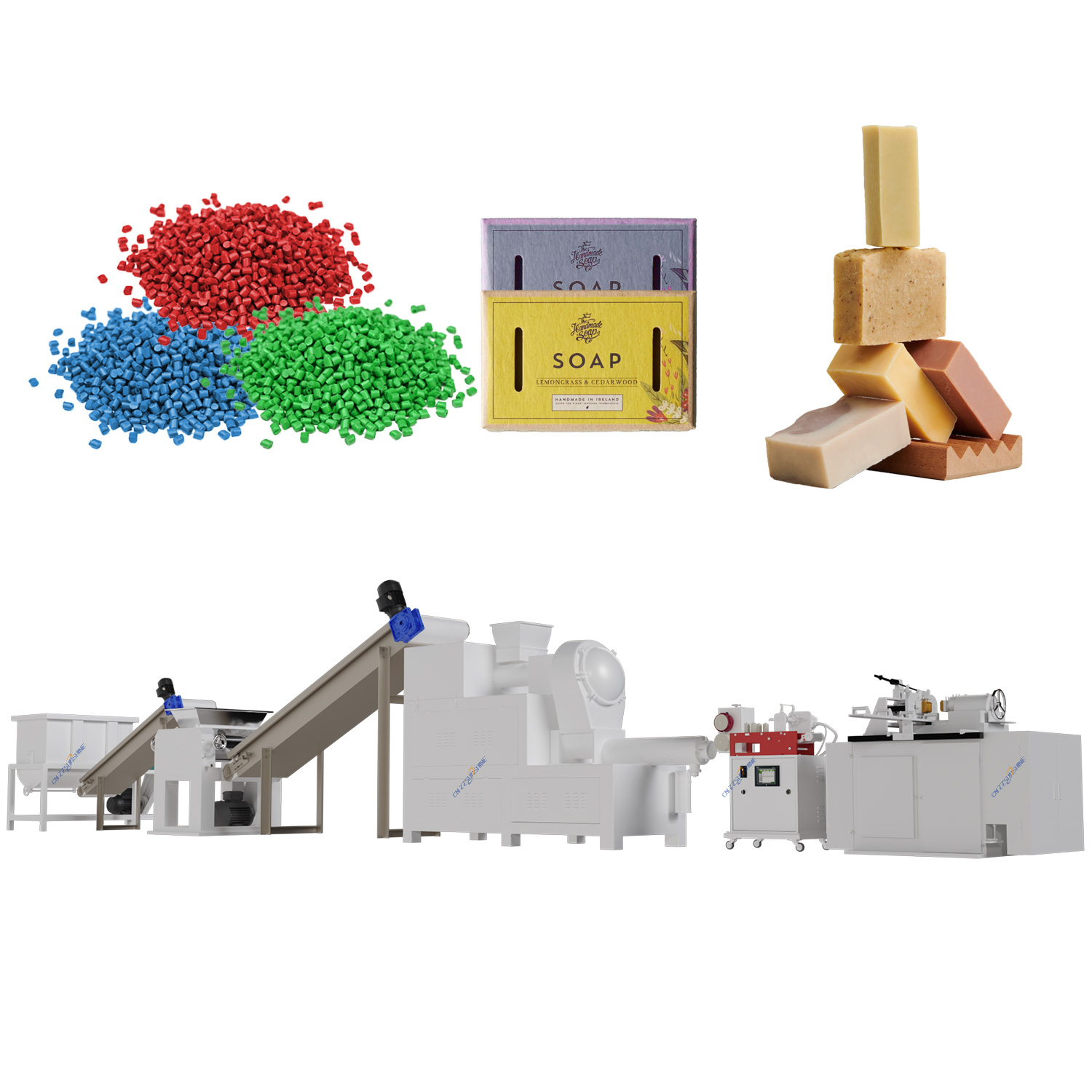
The soap industry, whether catering to laundry bars, luxurious bath soaps, or specialized beauty soaps, demands consistency, hygiene, and efficiency. Traditional manual methods simply can’t compete with the precision and output required in today’s market. This is where the automatic soap production line steps in, transforming raw materials into finished, stamped bars with minimal human intervention. For manufacturers seeking output in the range of 50kg to 150kg per hour, investing in a complete, integrated line isn’t just an upgrade; it’s a strategic necessity for growth and competitiveness.
At the heart of this transformation is the seamless integration of specialized machinery. The journey begins with the soap mixer or mixing machine. This critical component ensures the homogenous blending of fats, oils, alkalis, and additives, creating the perfect soap base. Gone are the days of inconsistent batches; modern mixers guarantee uniformity crucial for quality.
The blended mass then moves to the refining stage. Here, the OEM three roller grinding mill plays a pivotal role. This robust machine processes the soap base through multiple rollers, refining its texture, removing air pockets, and ensuring a smooth, dense consistency. The result is a superior quality base material ready for extrusion.
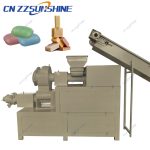
Next comes the soap plodder machine for bar soap, often a vacuum plodder. This stage is vital for creating the final bar structure. The plodder compresses the refined soap under vacuum conditions, removing any residual air and forming a continuous, solid log or billet. This extrusion process defines the density and integrity of the final soap bar. Whether producing standard laundry bars or high-end toilet soap, the plodder is indispensable.
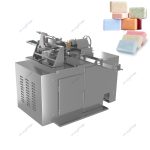
The continuous soap log then reaches the cutting station. This is where an automatic block cutter machine shines. Unlike manual cutting machines or even electronic cutting/pneumatic cutting variants, a fully automatic cutter synchronizes perfectly with the extrusion speed. Using precise blades, it slices the log into individual, uniform soap slugs or billets with remarkable speed and accuracy, essential for maintaining the laundry bar soap production line or toilet soap finishing line rhythm.
The cut slugs proceed to the final shaping and branding phase. An automatic printer (or soap stamping machine) imparts the brand identity. These machines press the slugs into their final bar shape and emboss logos, designs, or text with high precision and clarity. While semi-automatic printers exist, the fully automatic version integrates flawlessly into the high-speed line, ensuring every bar is perfectly presented, ready for curing and packaging – often facilitated by a film packaging machine.
Investing in a complete automatic soap production line, encompassing the soap mixer, OEM three roller mill, vacuum plodder, automatic block cutter machine, and automatic printer, delivers unparalleled advantages. It dramatically increases output (reaching that crucial 50-150kg per hour target), ensures consistent product quality, reduces labor costs and human error, and enhances overall hygiene. For businesses scaling up or launching a new beauty soap making line or laundry soap making line, this integrated approach offers a reliable, efficient, and customizable solution. Manufacturers can often source these lines with custom soap cutting machine options or other tailored components, ensuring the machinery perfectly fits specific product requirements and factory layouts. The future of soap manufacturing is automated, precise, and incredibly efficient.