Small-Scale Soap Success: Your Path to Production with a Compact Line
The dream of crafting high-quality bar soap – be it luxurious beauty bars, reliable laundry soaps, or specialty formulations – is more accessible than ever. For entrepreneurs and small businesses, investing in a large-scale industrial setup is often impractical. That’s where the efficiency and affordability of a dedicated soap making production line designed for smaller outputs becomes invaluable. Specifically, a Mini Soap Production Line or a Small Line Production Bar Soap setup provides the perfect entry point, offering automation where it counts without the overwhelming footprint or cost.
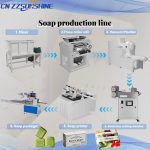
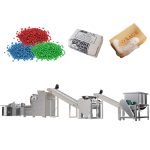
A well-configured bar soap making machine small mini fully automatic line streamlines the entire process from raw materials to finished, stamped bars ready for packaging. While the level of automation can vary, even compact lines significantly reduce manual labor and ensure consistent quality. Key components work in harmony:
1. Preparation & Mixing: It all starts with blending fats, oils, alkalis, and additives. A robust soap mixer or mixing machine ensures a homogeneous blend, critical for the final bar’s properties. For formulations requiring finer texture, an OEM three roller grinding mill might be integrated earlier in the process.
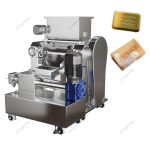
2. Refining & Extrusion: This stage defines the soap’s density and smoothness. A soap plodder machine for bar soap, often a Vacuum plodder in compact lines, is essential. It works the soap under vacuum to remove air pockets, creating a dense, smooth amalgamate, and extrudes it as a continuous, solid log ready for cutting. This step is crucial for both toilet soap finishing line quality and durable laundry bar soap production line outputs.
3. Cutting & Stamping: Precision here gives the soap its final shape and branding. An automatic block cutter machine slices the extruded log into precise, uniform billets. Options range from Electric washing soap cutters to Pneumatic Cutting Machines, depending on the line’s automation level. Following cutting, a Soap Stamping Machine imprints logos or designs onto each bar. While high-volume lines use Automatic Printers, smaller setups might utilize efficient Semi-automatic Printers or even Manual Cutting Machines for specific artisanal touches.
4. Packaging: The final step protects and presents the product. A Film Packaging Machine efficiently wraps individual bars or bundles them, completing the bath soap making machine or laundry soap making line cycle.
The beauty of opting for a small line production bar soap solution lies in its scalability and customization. You can start with core machines like the soap plodder, mixer, and a reliable cutter (be it Electronic Cutting Machine or other types), and add components like a dedicated custom soap cutting machine or more advanced stamping as demand grows. This modular approach, often supported by OEM partnerships, makes the Automatic soap production line concept achievable even for smaller operations.
Investing in a Mini Soap Production Line isn’t just about buying machinery; it’s about acquiring the capability to produce consistent, professional-grade bar soap efficiently. By focusing on the essential soap making machine components and leveraging smart automation, small producers can effectively compete, turning creative formulations into tangible, market-ready products with impressive return on investment.