Industrial Soap Making Equipment: From Handcrafted to High-Volume Production
The world of soap manufacturing spans from the artisan crafting small batches to industrial giants producing millions of bars annually. Central to both ends of this spectrum is the need for reliable, efficient soap making equipment. Whether you’re scaling up a handmade operation or optimizing a large-scale laundry bar soap production line, the right machinery is paramount for quality, consistency, and profitability.
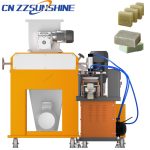
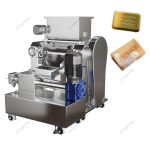
For smaller producers, particularly those specializing in handmade soap, achieving a uniform, professional finish is crucial. This is where dedicated soap pressing machines shine. These devices apply controlled pressure to shape and compact soap dough into consistent bars or specialty shapes. While manual presses exist, the pneumatic soap press machine offers significant advantages. Utilizing air pressure, it delivers powerful, repeatable force with minimal operator effort, ensuring consistent density and appearance for each bar – essential for brand quality. This type of press is often a cornerstone of a mini soap production line, bridging the gap between manual labor and full automation.
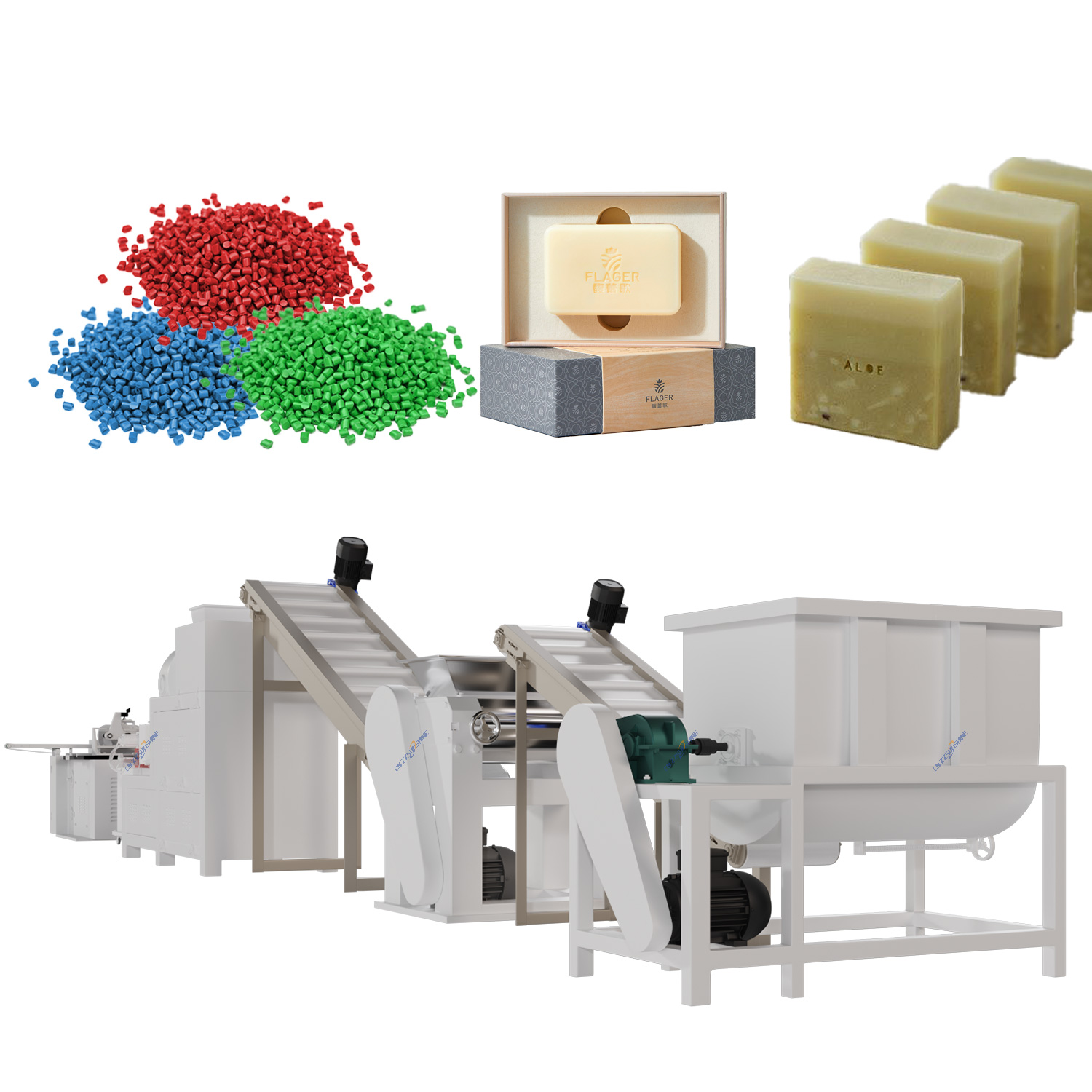
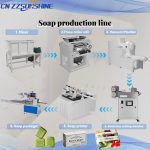
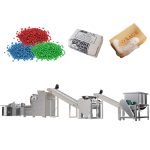
Moving towards larger volumes, a comprehensive automatic soap production line integrates several key machines. The process typically begins with a soap mixer or mixing machine, blending oils, fats, lye, and additives into a homogenous paste. This mixture is then fed into a soap plodder machine for bar soap. Plodders work the soap mass, extruding it through a die to form a continuous log. For superior quality, especially in toilet soap finishing lines, a vacuum plodder is often employed. This vital piece of soap making machine removes air bubbles during extrusion, resulting in a denser, smoother, and more refined final product.
The extruded soap log then progresses to cutting. An automatic block cutter machine slices the log into precise, uniform blocks. Options range from manual cutting machines suitable for very low volume to electric washing soap cutters, pneumatic cutting machines, or electronic cutting machines for speed and precision in laundry soap making lines or beauty soap making lines. Following cutting, the individual blocks are typically fed into a soap stamping machine for branding and detail imprinting. Finally, a film packaging machine wraps the finished bars for retail.
For manufacturers requiring specialized shapes or sizes, custom soap cutting machines or OEM three roller grinding mills (used for refining soap paste for specific textures) become valuable assets. Suppliers often offer equipment for specific segments, such as dedicated bath soap making machines or washing liquid production equipment.
Conclusion
Selecting the right soap making production line equipment depends heavily on production volume, target market (laundry, toiletries, beauty), and desired level of automation. From the essential pressure control of a pneumatic soap press machine for artisanal quality to the integrated efficiency of a fully automatic soap production line with its automatic printer and high-speed cutters, modern machinery empowers producers of all sizes. By understanding the roles of key components like the soap plodder, mixer, and cutter, businesses can build efficient, reliable systems to meet market demands effectively.